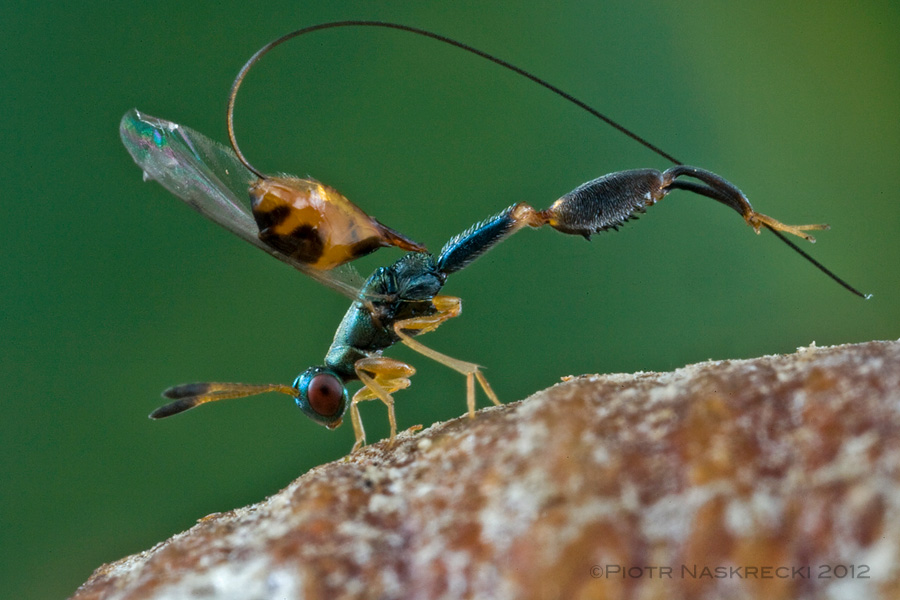
Mantis wasps (Torymidae: Podagrion) are tiny, parasitoid wasps that develop in preying mantis’ egg masses, or oothecae. Each developing wasp larva consumes a single egg in the ootheca (which can contain several hundred eggs), but in some areas the number of these insects can be so high that it is a miracle that any mantids survive at all. Podagrion wasps can be identified by the combination of a very long ovipositor and huge hind legs, which are used by the female to guide the ovipositor directly into the mantis eggs (I have always been impressed by the similarity of these legs to the raptorial legs of a preying mantis, the wasps’ host.) I photographed this wasp, which was only about 2 mm long, in Cambodia as it emerged from an ootheca of a preying mantis; surprisingly, this female was the only individual to emerge, which was good news from the remainder of the eggs.


 The Smaller Majority
I love the wasp pose (looks like it is in the middle of a dance). Those hind legs are amazing!
I love this word: ootheca. I think I will name my next pet Ootheca.